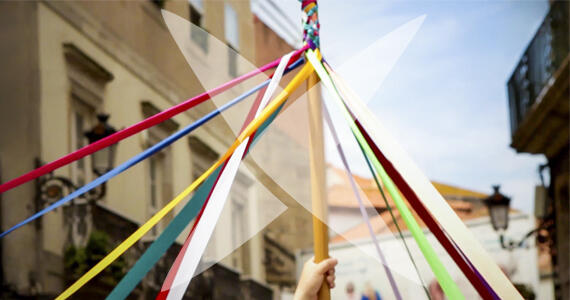
Festivity honouring "Nuestra Señora de Fátima" (Our Lady of Fátima).
Festivity honouring San Amaro in the parish of Aldán.
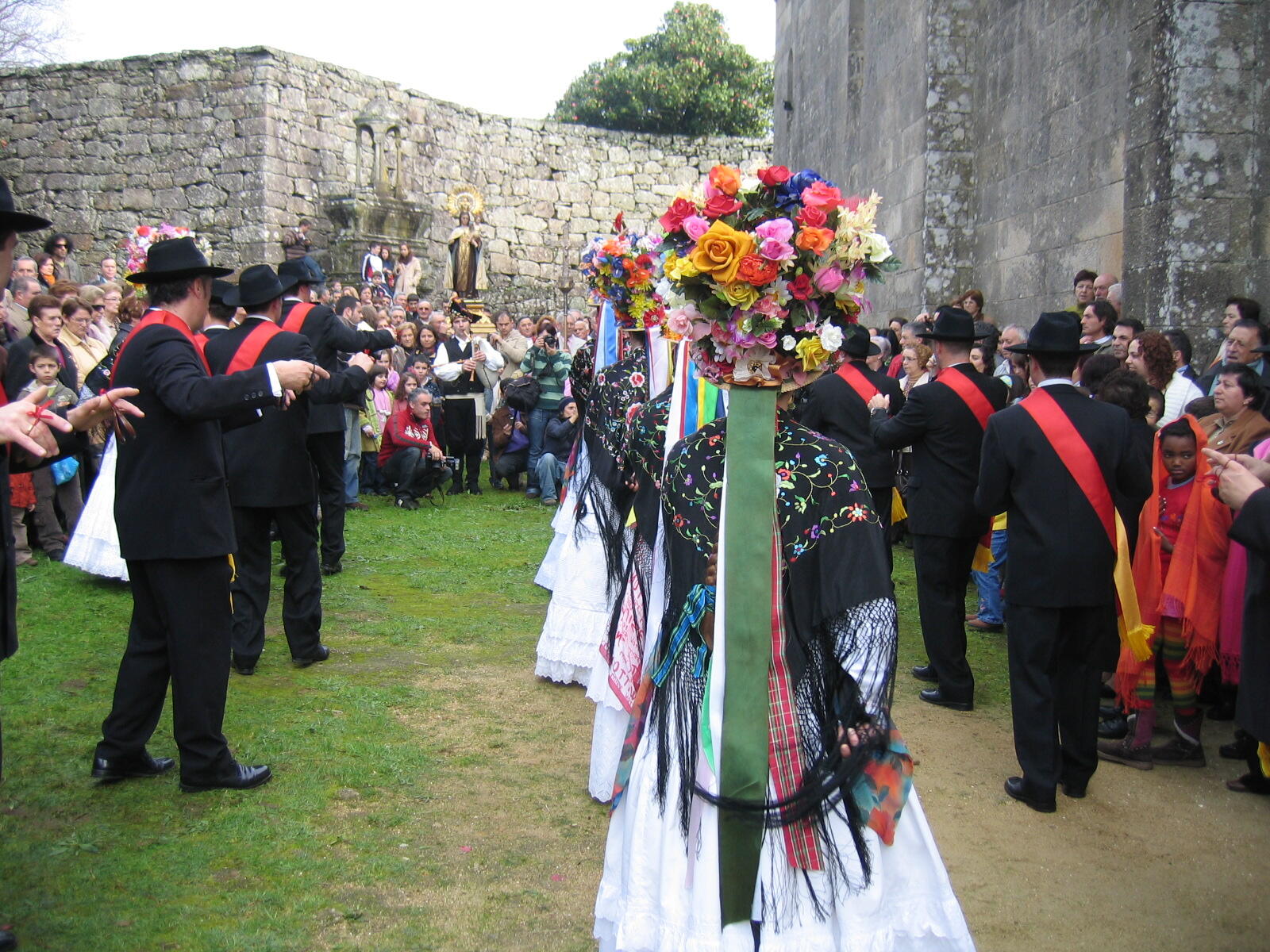
This dance is performed every 20 January on the feast of Saint Sebastian. It takes place in the atrium of the church of San Cibrán in Aldán, although sometimes it is repeated in other parts of the parish. Its origin has been linked to paganism, but like many other traditions, it was Christianised and became an expression of gratitude or happiness. It is performed by men and women with striking costumes and adornments.
Festivity in the chapel of Santa María Magdalena in honour of San Blas.
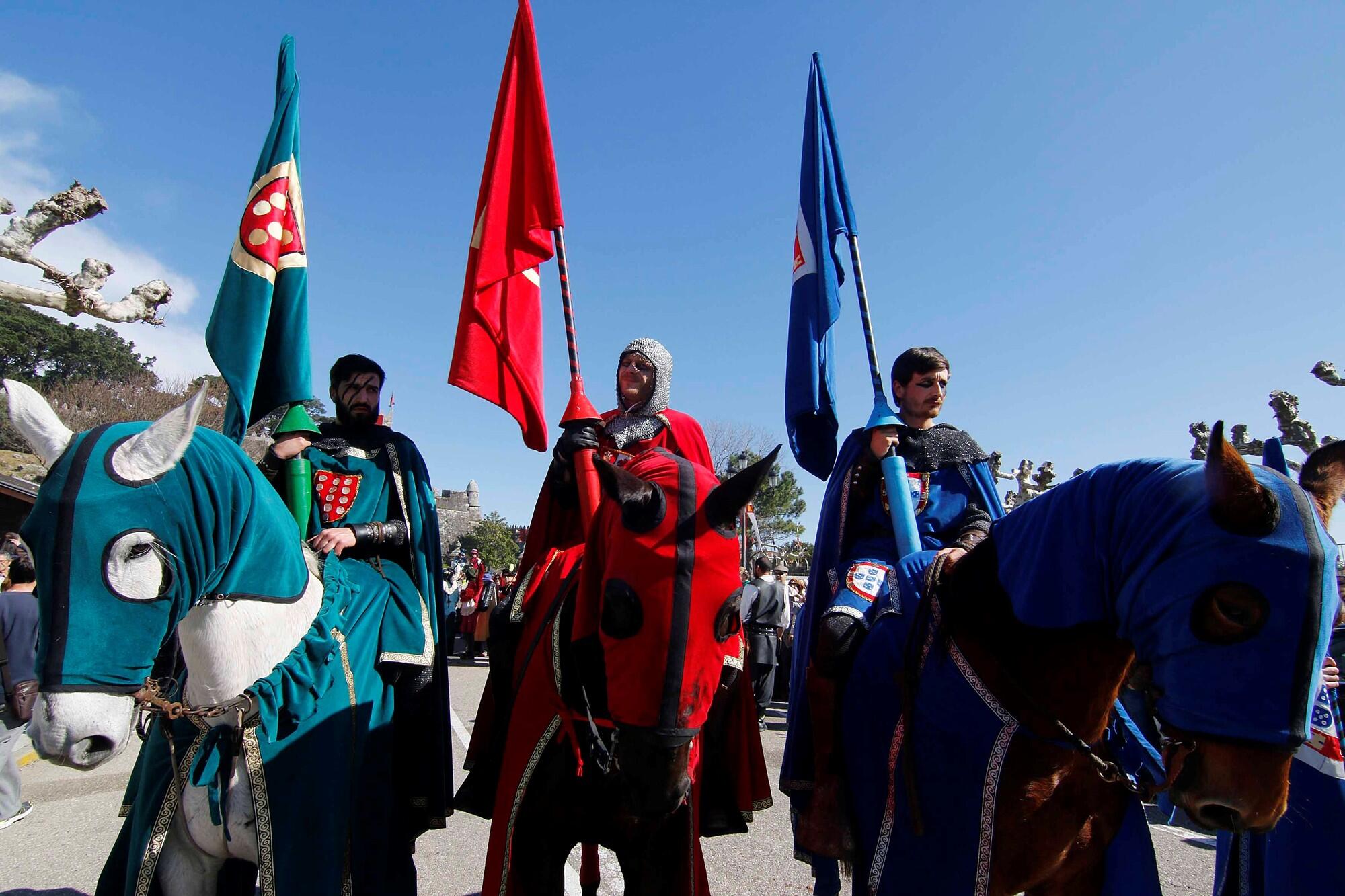
This festival consists of a historical re-enactment of the arrival of the caravel La Pinta to Baiona on 1 March 1493 with news of the discovery of the New World. It has a deep historical significance and attracts tens of thousands of visitors every year, as well as a large number of locals. The event is full of the colours, shapes and flavours of a medieval town. The re-enactment takes place on the beach of A Ribeira in the form of a theatrical performance, and there are also food stalls, craft stands, jousting tournaments, falconry displays, a climbing wall, zip lines, knight training for children, medieval rides throughout the streets and squares and a royal market.
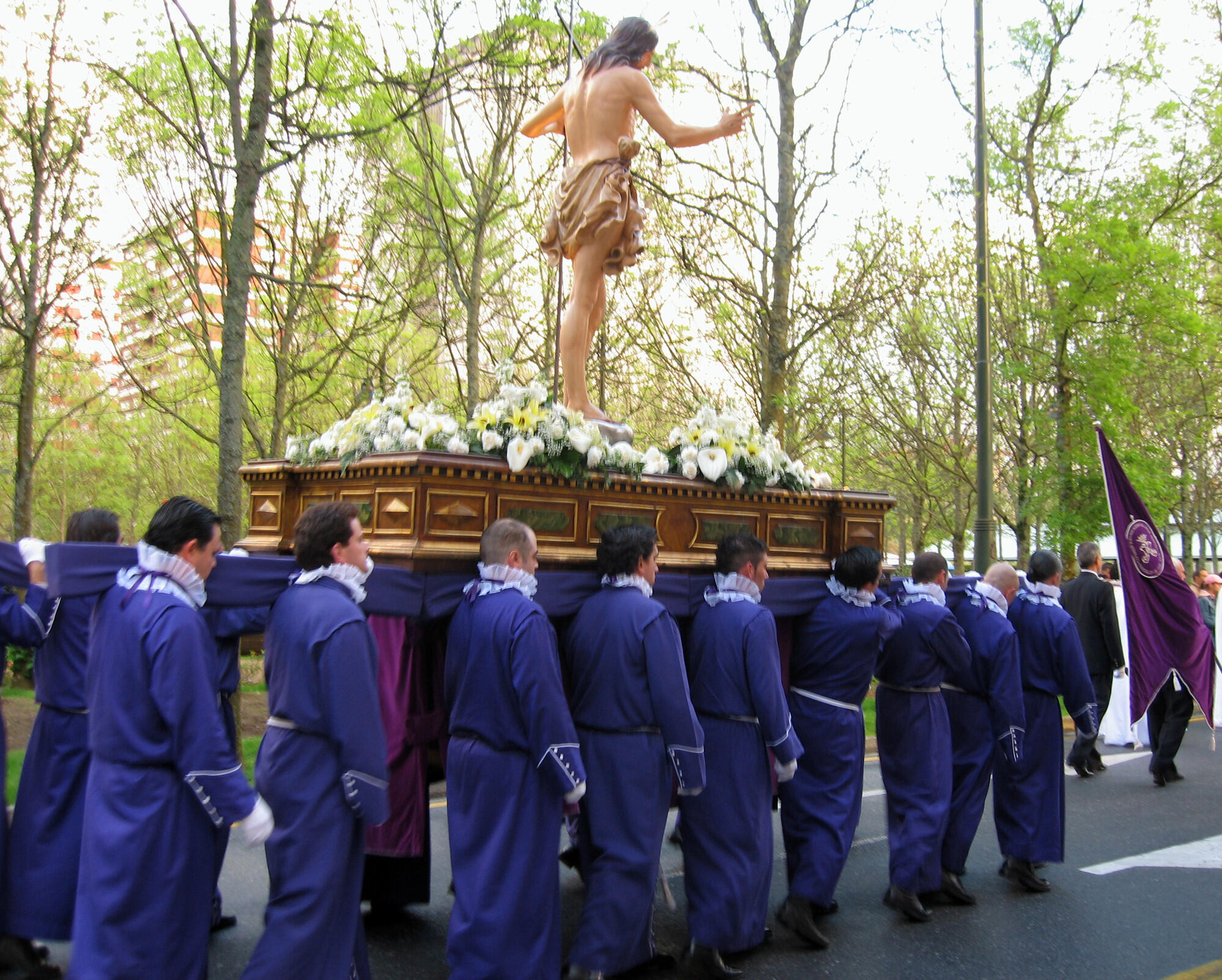
Easter (Holy Week) is the annual Christian commemoration of the passion, death and resurrection of Jesus of Nazareth. Therefore it is a period of intense liturgical activity in the various Christian movements.
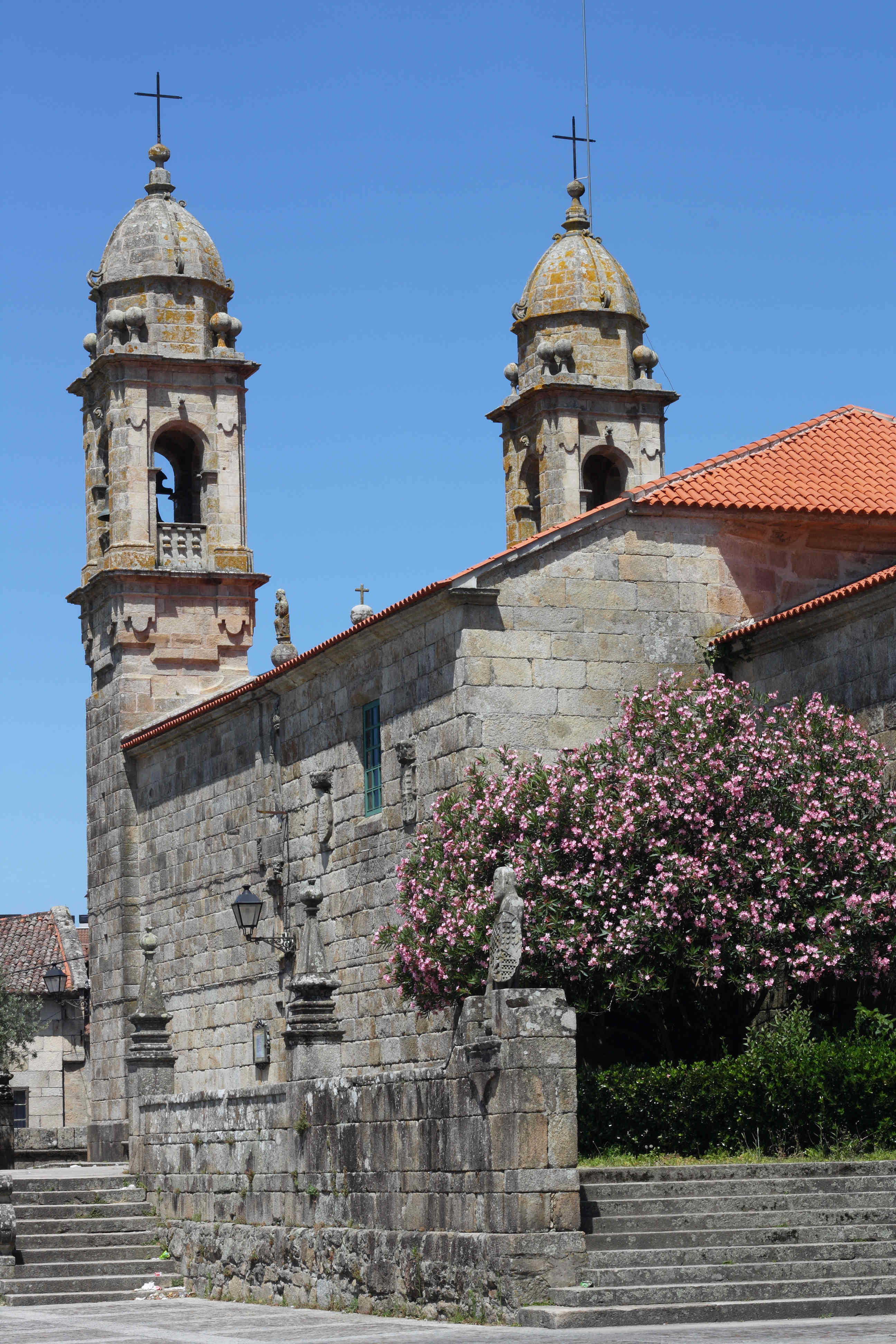
On 21 March, the traditional Pilgrimage of "San Benito de Inverno" is celebrated in Cambados. Many devotees come and offer themselves to the Saint in order to heal their skin diseases.
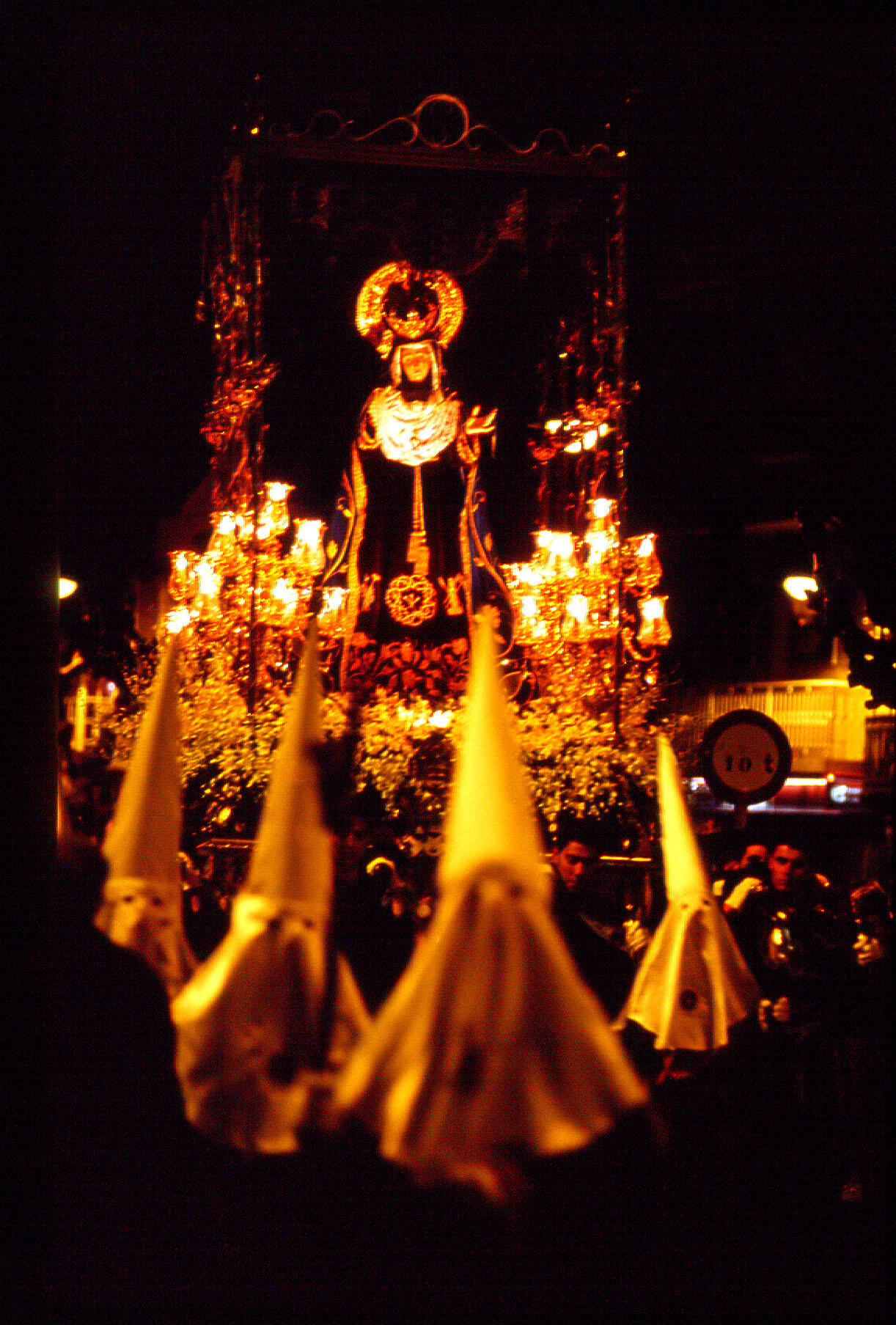
Holy Week in Cangas is one of the most complete and spectacular of those celebrated in Galicia due to its fervour, realism and seafaring origin. It has a great historic-artistic value, particularly due to the Nazarene statue and the Descent Ceremony, both of which resonate for their emotional realism.
Religious services honouring Virgen del Carmen.